The Wild Within: Where the Biological Body Meets the Archetypal Psyche
Sep 20, 2026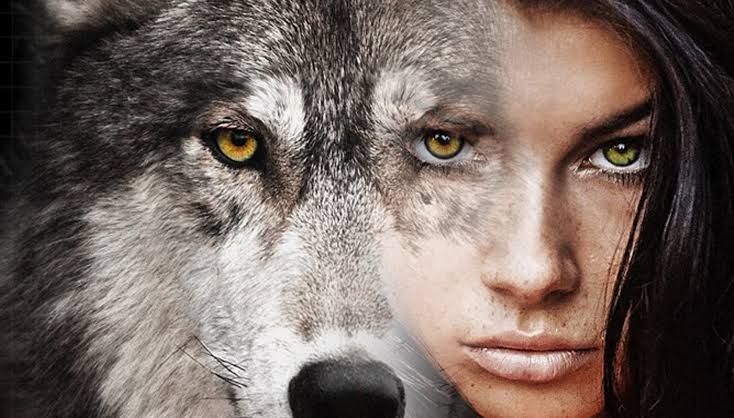
What do we mean when we speak of the wild in women?
For many of us, the word evokes something untamed: instinct, freedom, desire, nature, perhaps even danger. Yet wildness is often misunderstood as impulsivity, chaos or a rejection of responsibility. In the context of healing, it points to something far deeper. It describes the instinctive intelligence that enables us to sense what is true, protect what matters, move toward what nourishes us and live in relationship with our own nature.
Two writers who approach this territory in powerful but distinct ways are Kimberly Ann Johnson, author of Call of the Wild, and Clarissa Pinkola Estés, author of Women Who Run With the Wolves. Johnson approaches the wild primarily through the animal body and the biology of the nervous system. Estés approaches it through myth, symbol and the archetypal psyche.
One might ask: What has happened to the animal body?
The other: What has happened to the instinctual soul?
These are not competing perspectives. They are two doorways into the same living territory, and bringing them together offers women a rich pathway back to embodied instinct, agency and wholeness.
The biological wild: the intelligence of the animal body
Kimberly Ann Johnson is a Somatic Experiencing® Practitioner whose work explores trauma, sexuality, birth, power and the restoration of women’s instinctive capacities. In Call of the Wild, the wild is rooted in our biological inheritance as mammals.
Beneath our conditioning is a body designed to orient, sense, mobilise, protect, pursue, retreat, connect, experience pleasure and rest. This animal body is continually receiving information about safety, danger, attraction, aversion, boundaries and belonging, often before the conscious mind can explain what it knows.
Yet many women have been socialised away from this embodied intelligence. We may learn to override fatigue, hunger, discomfort and desire. We may suppress anger, mute our boundaries, remain agreeable when something feels wrong or appease others rather than risk disapproval. We may disconnect from the impulse to run, push away, speak, reach, resist or take up space.
From a nervous-system perspective, these adaptations make sense. They may once have protected attachment, belonging or physical safety. But when they become habitual, we can lose access to the full range of our defensive responses and, with them, our felt sense of choice.
Johnson pays particular attention to reclaiming the healthy fight response. Healthy fight is not violence or aggression without conscience. It is the embodied capacity to say no, establish a boundary, move toward what we want and act on behalf of what we love. It is protective life force.
The biological wild may be felt as:
-
pressure through the feet and legs
-
a spine that lengthens
-
heat or energy moving through the body
-
the impulse to turn, push, reach, run or make sound
-
a clear and grounded “no”
-
appetite, pleasure and sexual vitality
-
an accurate sense of attraction and aversion
-
the ability to mobilise when needed and settle when the action is complete
From this perspective, becoming wild does not mean becoming uncontrolled. It means recovering access to the body’s instinctive repertoire so that we have more, not less, choice.
The biological wild moves from sensation to impulse, from impulse to action, and from action to embodied agency.
The archetypal wild: the instinctual life of the psyche
In Women Who Run With the Wolves, Clarissa Pinkola Estés introduces the Wild Woman as an archetypal presence: an ancient pattern of instinctual feminine knowing carried through myths, folktales, dreams and images.
The Wild Woman is not simply a woman who rejects social convention or behaves spontaneously. She represents the deep psyche that knows what must live and what must die; when to remain and when to leave; what to trust; what to protect; and how to create, grieve, regenerate and begin again.
Across the stories Estés gathers, this wild nature appears in many forms: the wolf, the old woman, the outcast, the creatrix, the mother, the lover, the skeletal woman, the one who descends into the underworld and the one who knows the way home.
In the story of La Loba, the Bone Woman gathers the scattered bones of what has been lost, patiently lays them together and sings them back into life. At an archetypal level, those bones may represent neglected creativity, silenced knowing, abandoned dreams, lost identity, ancestral belonging or parts of the self that could not survive within the life we were required to live.
Where Johnson often accesses the wild through bodily sensation and defensive response, Estés approaches it through story, symbol, imagination, dream and ritual. A folktale can help us recognise a pattern larger than our personal biography. It gives shape and language to experiences we may have felt but not yet understood.
The archetypal wild moves from story to recognition, from recognition to meaning, and from meaning toward a reorganisation of life around a deeper truth.
Two doorways into instinct
The biological and archetypal perspectives emphasise different dimensions of wildness:
| The Biological Wild: | The Archetypal Wild: |
|---|---|
|
|
|
|
|
|
|
|
|
|
|
|
These two forms of knowing are intimately related.
A story or symbol can awaken a biological response before we consciously understand its meaning. An image may change our breathing, posture, muscle tone or felt sense. We may feel drawn toward a figure, repelled by it, moved to tears or unexpectedly enlivened.
Equally, an unfinished biological impulse may generate images, memories, dreams and mythic associations. The body preparing to push away may evoke the image of a warrior, a protective animal or a heroine finally confronting the predator. Physiologically, this is mobilisation. Archetypally, it may be initiation. Both descriptions can be true.
In Jungian thought, this meeting place between body and psyche can be understood as psychoid territory: a depth at which matter and psyche, instinct and image, cannot be neatly separated. The body gives sensation to the symbol, while the symbol gives image and meaning to the body’s experience.
Wildness is not dysregulation
It is important to distinguish reclaimed wildness from reactivity or overwhelm.
Wildness is not:
-
impulsive acting out
-
permanent nervous-system activation
-
aggression without relationship or responsibility
-
rejecting every form of structure
-
performing a stereotyped version of femininity
-
treating every intense feeling as authentic instinct
-
romanticising trauma responses or dysregulation
A nervous system fixed in fight is not necessarily free. Neither is a person who can only flee, freeze, submit or override their body.
True wildness includes discernment. It knows when to act and when to wait, when to move forward and when to retreat. It includes fierce protection and deep rest, sound and silence, action and receptivity. It is responsive rather than compulsive.
The wild woman is not less regulated. She is less domesticated by patterns that require her to abandon herself.
The embodied archetypal wild
My own work as a Somatic Experiencing® Practitioner and Sandplay therapist brings these two dimensions into relationship.
The folktale offers an archetypal map. The body reveals how each woman is meeting that map in the present moment.
When we listen to the story of La Loba, for example, we can explore its symbolic meaning: What are the bones I have lost or left behind? What in me is waiting to be gathered? What wants to be remembered, restored or sung back into life?
But we can also listen somatically:
-
What happens in my body as I imagine entering the desert?
-
Do I feel drawn toward the bones, or do I pull away?
-
Do I become curious, watchful, numb or still?
-
Where do I feel an impulse to move, breathe, sound or reach?
-
What support would make it possible to approach what has been lost?
-
What changes as the skeleton begins to take form?
-
What embodied resource might help dormant life return?
The story does not impose meaning upon the body, and the body is not used merely to illustrate the story. They enter into dialogue.
This is where symbolic work becomes lived experience. We are not only thinking about the Wild Woman or analysing what she represents. We are noticing how her story touches breath, muscle, voice, boundary, memory, longing and action. We are discovering where instinct remains available and where it has been interrupted, constrained or exiled.
Awakening what has never truly disappeared
The wild is not something we need to manufacture. Nor is it a new identity we must perform. It is an inheritance we learn to recognise again.
Our biological inheritance lives in the animal body; in sensation, impulse, rhythm, protection, pleasure and movement.
Our archetypal inheritance lives in the deep psyche; in story, symbol, dream, imagination, intuition and the ancient patterns of death and renewal.
When these dimensions meet, wildness becomes more than an evocative idea. It becomes embodied knowing. The body grounds the archetype, and the archetype gives meaning and direction to the body’s awakening.
This is the dual focus at the heart of my Awaken the Wild Woman Within series. Each month, we will enter a folktale from Clarissa Pinkola Estés’ life-affirming book Women Who Run With the Wolves. Through story, Sandplay, expressive practice, reflection and gentle somatic enquiry, we will listen for both the archetypal wisdom of the tale and the ways it is speaking through the body.
We begin with La Loba—the Bone Woman who gathers what has been scattered and sings life back into the bones.
Because the archetype calls us home.
And the body shows us the way.
Awaken the Wild Woman Within is a monthly series of one-day retreats held in my private studio on the Sunshine Coast. Our first gathering explores La Loba and the medicine of gathering the bones. Learn more and book your place.
Author